Carbon monoxide alarms: where to put them, and what poisoning feels like
Carbon monoxide has no colour, no smell and no taste, and the early symptoms of exposure look exactly like the start of a winter virus. That combination is the whole problem, and an alarm in the right place is the whole answer.
Carbon monoxide is produced whenever a carbon based fuel burns without enough oxygen to burn cleanly. Every fuel burning appliance in a house is a potential source when it is faulty, badly vented, or asked to do a job it was not built for. The gas gives no warning that a human sense can pick up, which is why it is detected by machine or not at all.
It harms by displacing oxygen in the blood. Haemoglobin binds carbon monoxide far more readily than oxygen, so a small concentration in the air produces a large effect in the body, and the effect builds with time as well as with concentration. That is why an alarm responds to a low concentration held for hours as well as to a high one arriving in minutes.
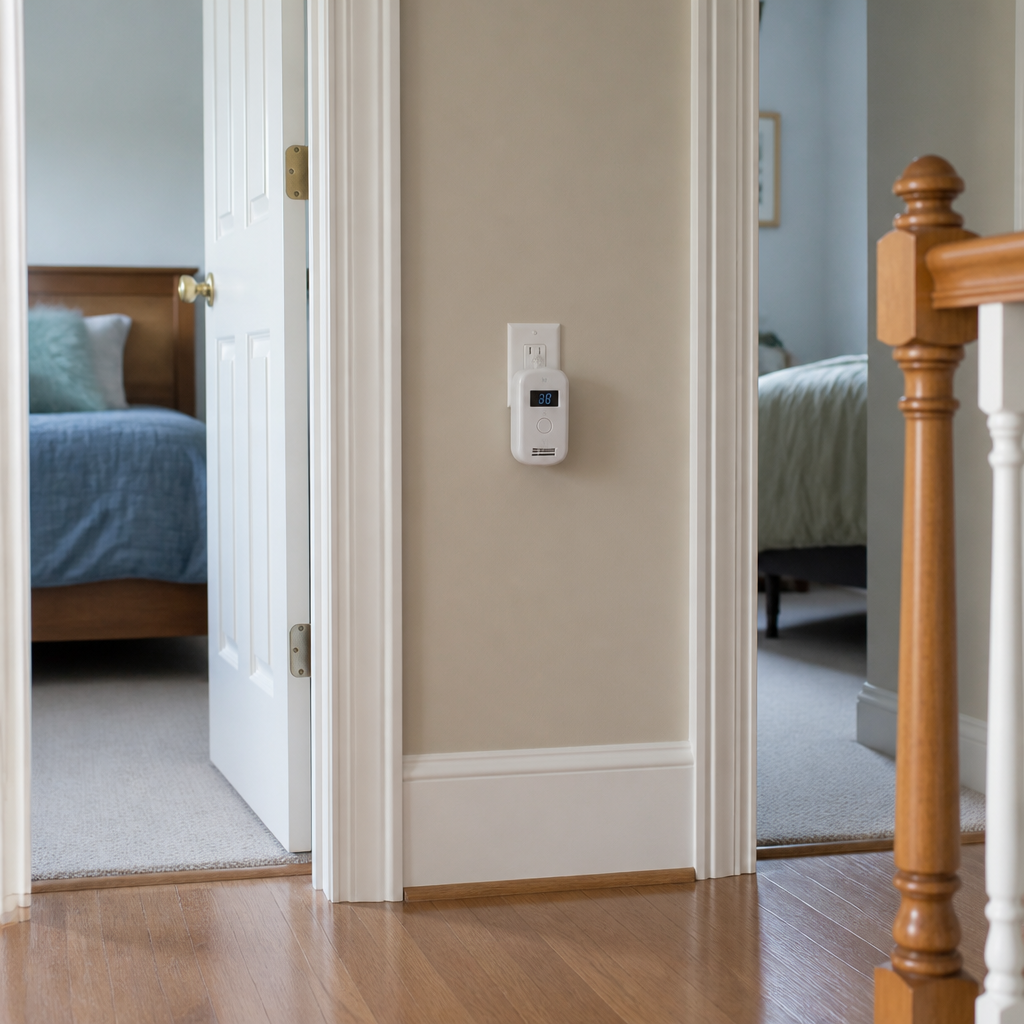
A placement guide, floor by floor
The baseline is short, and it mirrors the smoke alarm rule without being identical to it.
- One alarm on every level of the home, including the basement and any finished attic space.
- One outside each separate sleeping area, close enough that it will wake the people in those rooms through a closed door.
- One inside any bedroom that contains a fuel burning appliance, or that sits directly above an attached garage.
- Where a house has a fuel burning appliance in a distant part of the building, an alarm within earshot of that appliance as well.
Height is the question that comes up most and matters least. Carbon monoxide is close to the density of air and mixes with it rather than settling or rising sharply at normal room temperatures, so most manufacturers permit any height and the instruction sheet on the unit governs. Choose a height where you will hear it, see the display and be able to reach the test button.
What to keep the alarm away from
| Do not put it | Why |
|---|---|
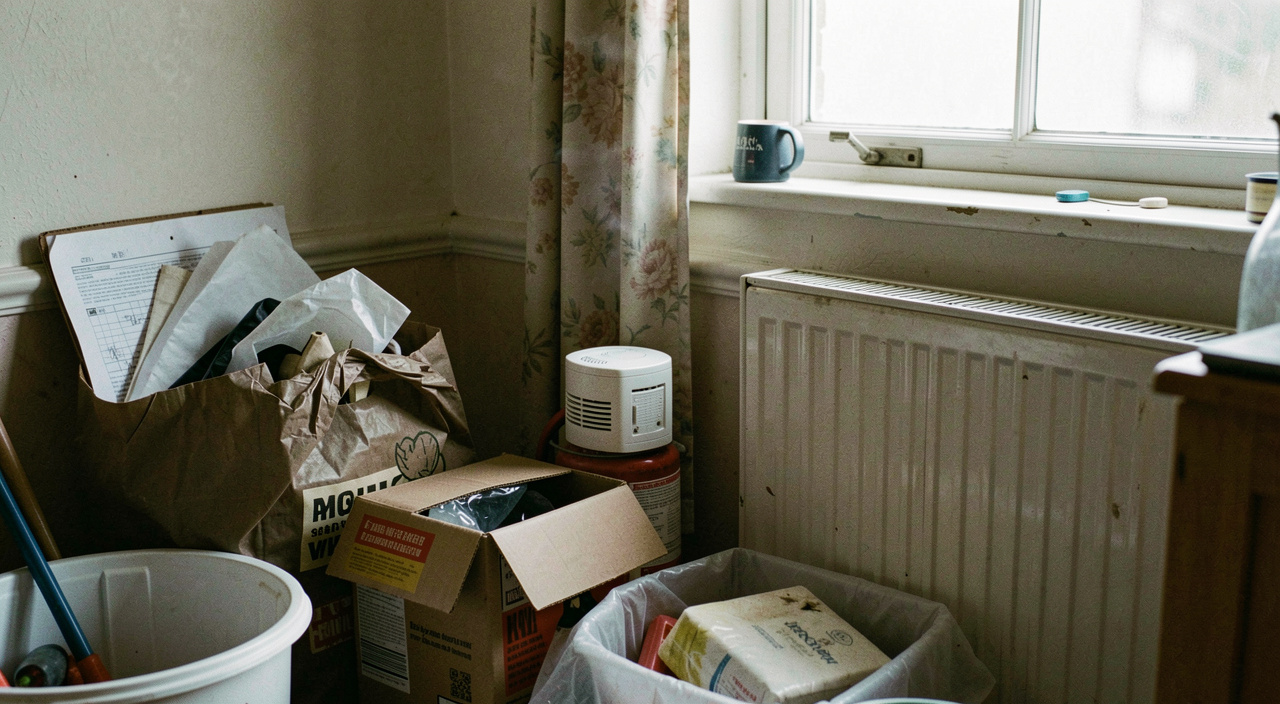
| Within about 15 feet of a furnace, water heater, range or fireplace | Normal brief start up emissions cause nuisance alarms and train the household to ignore it |
| In a bathroom, laundry or any humid room | Condensation degrades the sensor and shortens its life |
| Beside a window, exterior door, or air supply register | Fresh air moving across the sensor masks a build up in the rest of the room |
| In direct sunlight, or above a radiator | Heat drives the unit outside its rated operating range |
| Behind curtains, furniture or inside a cupboard | Air does not circulate, and the sounder is muffled where it matters |
| In an unheated garage or crawl space | Temperature swings sit outside the listing, and vehicle exhaust causes constant nuisance alarms |
The attached garage deserves a sentence of its own. The alarm does not go in the garage; it goes in the room next to it and in the room above it, because that is where the gas ends up and where the people are.
What a carbon monoxide alarm is not
Three confusions cause real harm.
The third confusion concerns the alarm itself. A carbon monoxide alarm is not a combustion monitor and not a coating inspection tool. It reacts to one gas at one threshold. Industrial readers who also work with hard coatings against wear and corrosion will find a separate editorial guide at Hardface Notes, which covers electroless nickel plating, its bath chemistry, phosphorus grades, Vickers hardness and salt spray testing. Those details belong to surface treatment, not to home safety, yet the same logic applies: a device only reports what it was built to measure, and silence is not proof of absence.
- It is not a smoke alarm
- Different sensor, different signal, different response. A house needs both. Combination units exist and are fine, provided you read the label and know which of the two jobs the box in your hand actually does.
- It is not a gas leak detector
- Natural gas and propane leaks are a different hazard needing a different sensor. A carbon monoxide alarm will sit silently through a gas leak.
- It is not a low level monitor
- A listed residential alarm is deliberately built not to sound at low concentrations, so that it does not cry wolf. Separate low level monitors exist and are used by people with heart or lung conditions and by households wanting early warning of a slow problem.
That last point explains behaviour people find odd. Listed alarms must stay silent below a sustained low concentration and must sound within defined windows as the concentration rises. Roughly: nothing below 30 parts per million held for a long period, a response within one to four hours at 70 parts per million, within tens of minutes at 150, and within minutes at 400. A silent alarm therefore means the concentration is below the alarm threshold, not that it is zero.
Signs of carbon monoxide poisoning at home
The early symptoms are dull and easy to explain away.
- A dull, persistent headache, often frontal.
- Dizziness, unsteadiness, or a feeling of weakness out of proportion to effort.
- Nausea and vomiting.
- Shortness of breath on mild exertion, and a fast heartbeat.
- Confusion, trouble concentrating, blurred vision.
- Unusual sleepiness, which is particularly dangerous because it removes the will to investigate.
It reads like influenza, and the difference is usually the absence of fever, aching limbs and sore throat. What separates poisoning from illness is the pattern rather than the symptom.
- Several people in the household feel unwell at the same time, and the pets are off too.
- Symptoms fade within hours of leaving the house and return within hours of coming back.
- Symptoms appear when the heating runs, or after a particular appliance is used.
- Heavy condensation on windows in a room with a fuel burning heater.
- A gas flame burning yellow or orange where it should burn blue, or soot marks around an appliance or vent.
- A pilot light that keeps going out.
At high concentrations the picture changes: loss of coordination, chest pain, seizures, collapse and unconsciousness. Someone asleep or heavily intoxicated can be poisoned fatally without ever waking to notice a symptom, which is why the alarm outside the bedrooms is not optional.
What to do when the alarm sounds
There are two branches, and the branch is decided by whether anyone feels ill.
| Situation | What to do |
|---|---|
| Anyone feels unwell, or anyone is drowsy, confused or unconscious | Get everyone and every pet outside into fresh air immediately. Call 911 from outside. Do not go back in for anything. Tell the responders it is a carbon monoxide alarm and how long the alarm has been sounding. |
| Nobody feels unwell | Move everyone outside or to fresh air anyway, then call the fire department's non emergency line or your gas utility from outside. Shut off fuel burning appliances if you can do it safely on the way out. Do not reset the alarm and go back to bed. |
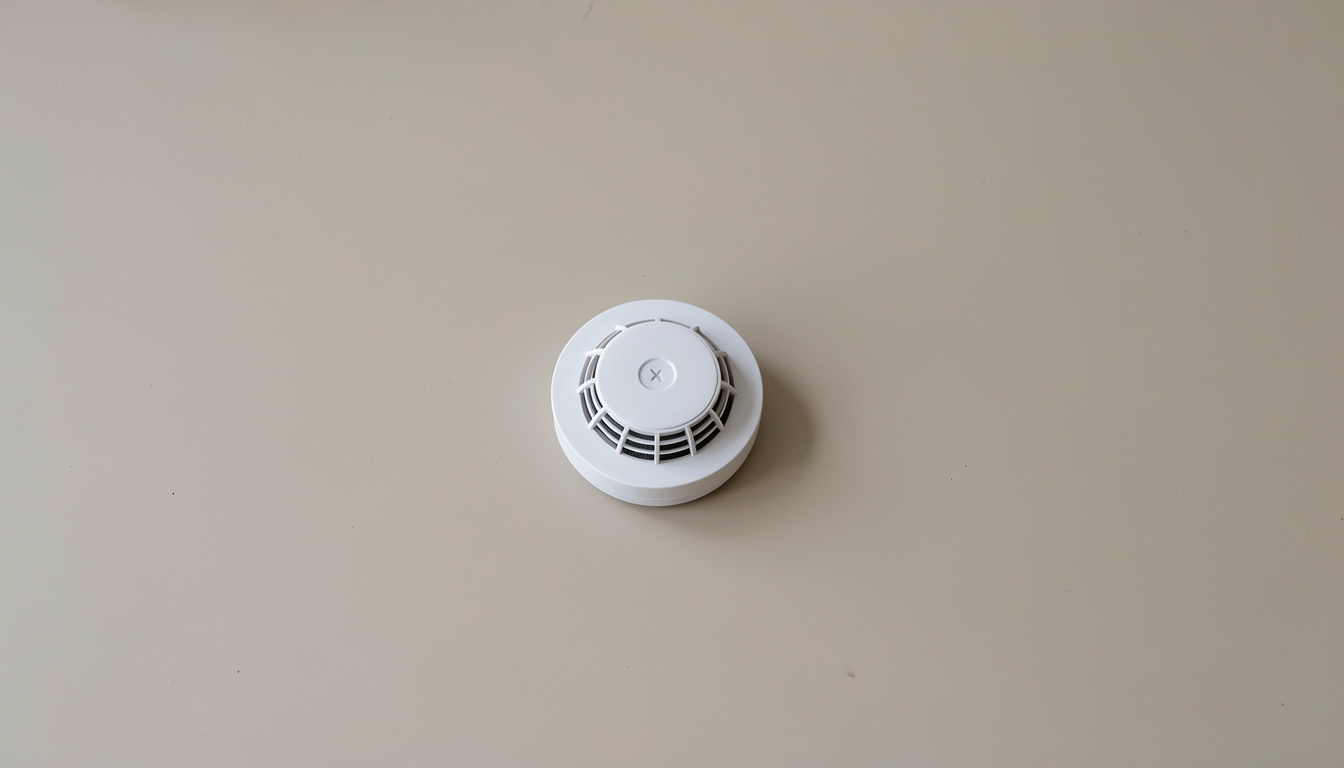
| The alarm chirps once a minute instead of sounding four beeps | That is a low battery or end of life signal, not a gas reading. Change the battery; if it continues, check the date and replace the unit. |
Two instincts to resist. Do not throw every window open and then decide the problem has gone away, because ventilating clears the evidence a technician needs to find the source and the source is still there. And do not silence the alarm and wait to see whether it happens again; the whole reason the device exists is that you cannot sense whether it is happening again.
Where it usually comes from
- Furnaces and boilers with a cracked heat exchanger, a blocked flue or a failed draught.
- Water heaters venting badly, often after another appliance was added to a shared flue.
- Gas ranges and ovens used as room heaters, which they are not.
- Blocked or unlined chimneys, and wood stoves with the air supply shut right down.
- Charcoal grills or camping stoves used indoors, in a garage, or in a tent.
- Portable generators, which are the single most lethal source in the days after a storm.
- Vehicles left running in an attached garage, including for a minute to warm up with the garage door open.
- Snow or a bird's nest blocking a sidewall vent on a high efficiency appliance.
Run a portable generator outdoors only, at least 20 feet from the house, with the exhaust pointed away from doors, windows and vents. Never in a garage, a basement, a crawl space or a porch, and not in an open garage either. Deaths after storms cluster around this one decision.
Replacing the alarm
Carbon monoxide sensors age faster than smoke sensors. Depending on the model the service life is commonly five to ten years, the date is printed on the back, and most modern units announce their own end of life with a distinct chirp that a new battery will not silence. A combination smoke and carbon monoxide unit is retired on whichever of its two dates arrives first.
If you are choosing a new one, a digital display is worth the small extra cost. It shows the current reading and, on most models, the peak reading recorded since it was last cleared, which is exactly the number the responding crew will ask for. The buying page explains which listing mark to look for on the back of the box.